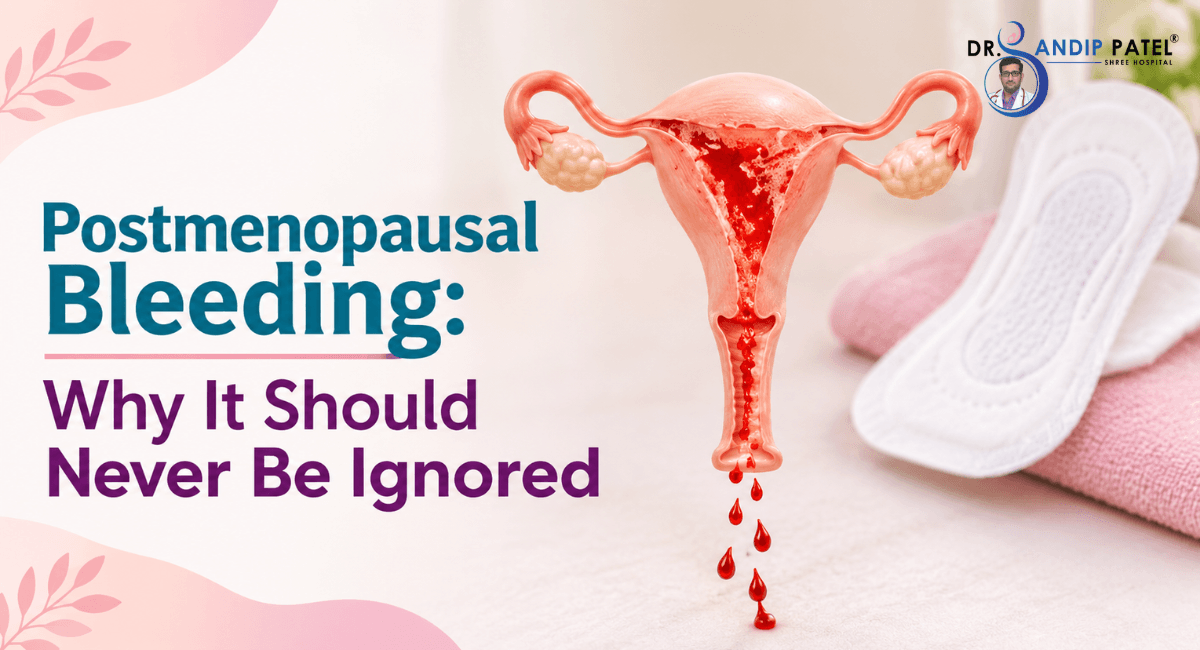
Menopause is the stage when a woman permanently stops having periods. It is usually confirmed after 12 consecutive months without a menstrual period. Once this stage is reached, any new vaginal bleeding or spotting should be checked by a gynaecologist.
Postmenopausal bleeding can appear as a few drops of blood, pink or brown discharge, or bleeding similar to a period. Although many causes are not serious, it can sometimes indicate a problem with the uterus or its lining. Getting it checked early helps identify the cause and arrange suitable treatment.
There are several possible causes of postmenopausal bleeding. Some are related to normal changes in the body after menopause, while others need medical treatment.
Common causes include:
Even if the bleeding happens only once, it should not be assumed to be a normal part of ageing.
One important reason doctors investigate bleeding after menopause is to rule out cancer of the endometrium, which is the inner lining of the uterus.
Bleeding is one of the most important endometrial cancer symptoms. Other symptoms may include unusual vaginal discharge or pelvic discomfort, although some women experience no other noticeable symptoms.
This does not mean that every woman with bleeding has cancer. Many cases have non-cancerous causes. However, early medical evaluation is important because identifying a serious condition at an earlier stage can improve treatment options.
The endometrium is the inner lining of the uterus. After menopause, it usually becomes thinner because oestrogen levels decrease.
During an ultrasound, the doctor may measure the endometrial thickness to check whether the uterine lining looks thinner or thicker than expected. A thickened lining may need further investigation, but the measurement alone cannot confirm whether a condition is cancerous.
A doctor may recommend a transvaginal ultrasound, an endometrial biopsy (a small tissue sample), or hysteroscopy, depending on the symptoms and findings. Further testing may be needed if bleeding continues or returns, even when an earlier scan appears reassuring.
Do not wait for the bleeding to happen again. Postmenopausal bleeding needs medical assessment even if it is light, painless or has stopped.
You should know when to see a gynaecologist if you notice:
A uterine polyp after menopause may be one possible reason, but only an examination and appropriate tests can identify the actual cause.
Menopause brings several changes to a woman’s body, but unexpected bleeding should never be treated as a normal part of this stage. Understanding the possible causes and seeking timely medical advice can help protect your health.
For women’s healthcare and gynaecological guidance, visit Shree Hospital. If you notice bleeding after menopause, unusual discharge, or other concerns, contact Shree Hospital Anklav for appropriate evaluation and medical advice.
The best laparoscopic surgeon in Anklav is one with proven experience, advanced surgical skills, and a patient-first approach. At Shree Hospital, Dr. Sandip Patel is known for his expertise in minimally invasive gynec surgery and consistent outcomes.
Laparoscopic surgery is commonly used to treat ovarian cysts, fibroids, endometriosis, ectopic pregnancy, and infertility-related conditions. It is also used for diagnosis in certain unclear cases.
Yes, laparoscopic surgery is considered very safe when performed by an experienced laparoscopy specialist. It involves smaller cuts, less pain, and a lower risk of complications compared to open surgery.
Recovery is usually faster than traditional surgery. Most patients can return to normal activities within a few days to a week, depending on the procedure and individual health.
Look for a qualified surgeon with experience in advanced laparoscopic procedures, positive patient outcomes, and access to a well-equipped hospital. Personal consultation also helps you feel confident and informed before treatment.
Let’s discuss your fertility goals and create a personalized treatment plan for you.