Managing work, home responsibilities, and personal health can be challenging for many women. Long office hours, night shifts, missed meals, and constant stress can gradually affect daily routines. Sometimes, these changes may also show up in menstrual health.
Working women health is important at every stage of life, especially when periods become irregular or a woman is planning pregnancy. Understanding how work habits affect the body can help women recognise changes early and take better care of their reproductive health.
The body follows a natural sleep-wake cycle, also called the circadian rhythm. It helps regulate several body functions, including the release of hormones.
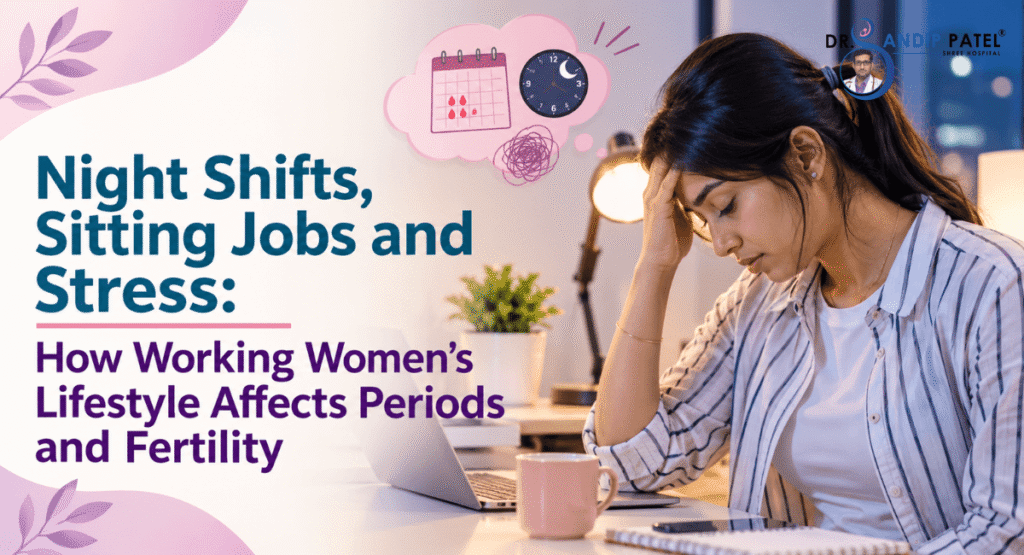
Working at night and sleeping during the day can disturb this routine. Research suggests that night shift and periods may be connected, as women working irregular or rotating shifts may experience changes in their menstrual cycles.
Poor sleep and changing work schedules can also affect sleep and hormones, which may influence the regularity of periods. However, night shifts do not cause menstrual problems in every woman.
Office workers often spend several hours sitting at a desk. Sitting for long periods does not directly cause PCOS, but very little physical activity can affect overall metabolic health.
The connection between sitting jobs and PCOS is worth understanding because PCOS is associated with insulin resistance in many women. Regular movement and physical activity can support metabolic health and help manage PCOS symptoms.
For better working women health, try taking short movement breaks during the day. Walking for a few minutes, using stairs, and including regular exercise in your routine can help reduce long periods of sitting.
Deadlines, long working hours, and pressure to manage several responsibilities can increase stress. When stress becomes persistent, it may affect the hormones involved in the menstrual cycle.
This is one reason irregular periods and stress are often discussed together. High stress may interfere with the signals between the brain and ovaries, sometimes delaying ovulation or changing the timing of periods.
Stress can also affect fertility indirectly through sleep, eating habits, and general health. Work stress and fertility are connected in complex ways, but everyday work pressure does not automatically cause infertility.
Many women choose to focus on their careers before planning a family. This is a personal decision, but age is an important factor because egg quantity and quality naturally decline over time.
Concerns about delayed pregnancy career women may have are understandable, but having a demanding job does not itself mean a woman will have fertility problems. If you are planning pregnancy, a preconception consultation can help you understand your reproductive health and any tests you may need.
Women with irregular periods, painful periods, or difficulty conceiving should seek medical advice rather than assuming work stress is the only reason.
Small changes can make daily routines healthier:
These habits support working women health, but they are not a replacement for medical evaluation when symptoms continue.
A busy work schedule should not mean ignoring changes in your menstrual cycle or reproductive health. Understanding how sleep, stress, and daily habits affect the body can help women make informed choices and seek medical advice when needed.
For women’s healthcare and gynaecological guidance, visit Shree Hospital. If you experience repeated irregular periods, significant menstrual changes, or concerns about pregnancy planning, contact Shree Hospital Anklav for appropriate medical advice and care.
The best laparoscopic surgeon in Anklav is one with proven experience, advanced surgical skills, and a patient-first approach. At Shree Hospital, Dr. Sandip Patel is known for his expertise in minimally invasive gynec surgery and consistent outcomes.
Laparoscopic surgery is commonly used to treat ovarian cysts, fibroids, endometriosis, ectopic pregnancy, and infertility-related conditions. It is also used for diagnosis in certain unclear cases.
Yes, laparoscopic surgery is considered very safe when performed by an experienced laparoscopy specialist. It involves smaller cuts, less pain, and a lower risk of complications compared to open surgery.
Recovery is usually faster than traditional surgery. Most patients can return to normal activities within a few days to a week, depending on the procedure and individual health.
Look for a qualified surgeon with experience in advanced laparoscopic procedures, positive patient outcomes, and access to a well-equipped hospital. Personal consultation also helps you feel confident and informed before treatment.
Let’s discuss your fertility goals and create a personalized treatment plan for you.