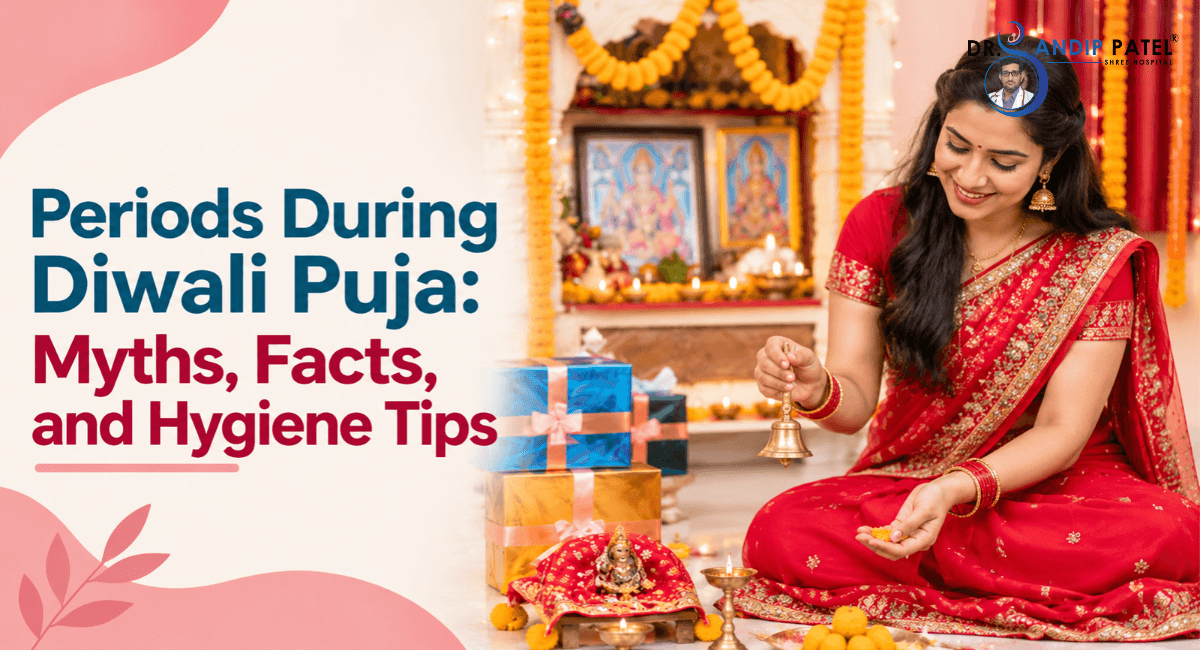
Diwali is a time for prayers, family gatherings, and festive celebrations. However, women who get their periods around this time may have questions about participating in puja, visiting temples, or following traditional practices. In many Indian families, menstruation is still surrounded by beliefs that can make women feel uncomfortable or confused.
Periods during Diwali are a normal part of reproductive health. Menstruation does not make a woman physically unclean or medically unfit to participate in daily activities. Understanding the science behind common beliefs can help women make informed decisions about their health while respecting their personal and family traditions.
Festive preparations often involve changes in daily routines. Late nights, travelling, stress, changes in eating habits, and less sleep can sometimes affect the timing of your menstrual cycle.
For most adults, menstrual cycles can normally range from 21 to 35 days. Therefore, getting your period a few days earlier or later does not automatically mean something is wrong.
However, periods during Diwali are not caused by performing puja, lighting diyas, or eating festive food. These activities do not directly start or stop menstruation. If your periods become repeatedly irregular, unusually heavy, or significantly different from your usual pattern, consult a gynaecologist.
Many beliefs about menstruation have been passed down through generations. Some are connected to religious customs, while others are based on misunderstandings about the female body.
Here are some common period myths in India:
Fact: From a medical perspective, menstruation does not prevent women from praying or participating in religious activities. Restrictions around periods during puja are based on cultural or religious traditions rather than medical evidence. Women can make personal choices according to their beliefs.
Fact: Taking a bath during menstruation is completely safe. In fact, maintaining personal hygiene can help you feel fresh and comfortable.
Fact: Menstrual blood contains blood and tissue from the uterine lining. It is a normal body fluid and does not make a woman impure.
Understanding these menstrual cycle myths and facts helps women separate medical information from traditional beliefs.
During festive gatherings, women may spend several hours away from home. Planning ahead can make managing your period easier.
Follow these menstrual hygiene tips:
Following these menstrual hygiene tips can help prevent irritation and keep you comfortable during celebrations.
Period cramps happen when the uterus contracts to help shed its lining. These contractions are influenced by substances called prostaglandins. Higher levels of prostaglandins can cause stronger contractions and more painful cramps.
If you experience discomfort during a period during festival celebrations, these measures may help relieve period cramps relief:
If your pain is severe, affects your daily activities, or does not improve with usual measures, consult a gynaecologist. Very heavy bleeding, dizziness, or unusual bleeding between periods also needs medical attention.
Periods during Diwali should not make women feel ashamed or worried about their health. Understanding periods during puja, following good hygiene practices, and knowing how to manage discomfort can make festive celebrations easier. Remember that menstruation is a natural process, and your health should always remain a priority.
For women’s healthcare and gynaecological guidance, visit Shree Hospital. If you experience severe cramps, unusual bleeding, or other menstrual concerns, contact Shree Hospital Anklav for appropriate medical advice.
The best laparoscopic surgeon in Anklav is one with proven experience, advanced surgical skills, and a patient-first approach. At Shree Hospital, Dr. Sandip Patel is known for his expertise in minimally invasive gynec surgery and consistent outcomes.
Laparoscopic surgery is commonly used to treat ovarian cysts, fibroids, endometriosis, ectopic pregnancy, and infertility-related conditions. It is also used for diagnosis in certain unclear cases.
Yes, laparoscopic surgery is considered very safe when performed by an experienced laparoscopy specialist. It involves smaller cuts, less pain, and a lower risk of complications compared to open surgery.
Recovery is usually faster than traditional surgery. Most patients can return to normal activities within a few days to a week, depending on the procedure and individual health.
Look for a qualified surgeon with experience in advanced laparoscopic procedures, positive patient outcomes, and access to a well-equipped hospital. Personal consultation also helps you feel confident and informed before treatment.
Let’s discuss your fertility goals and create a personalized treatment plan for you.