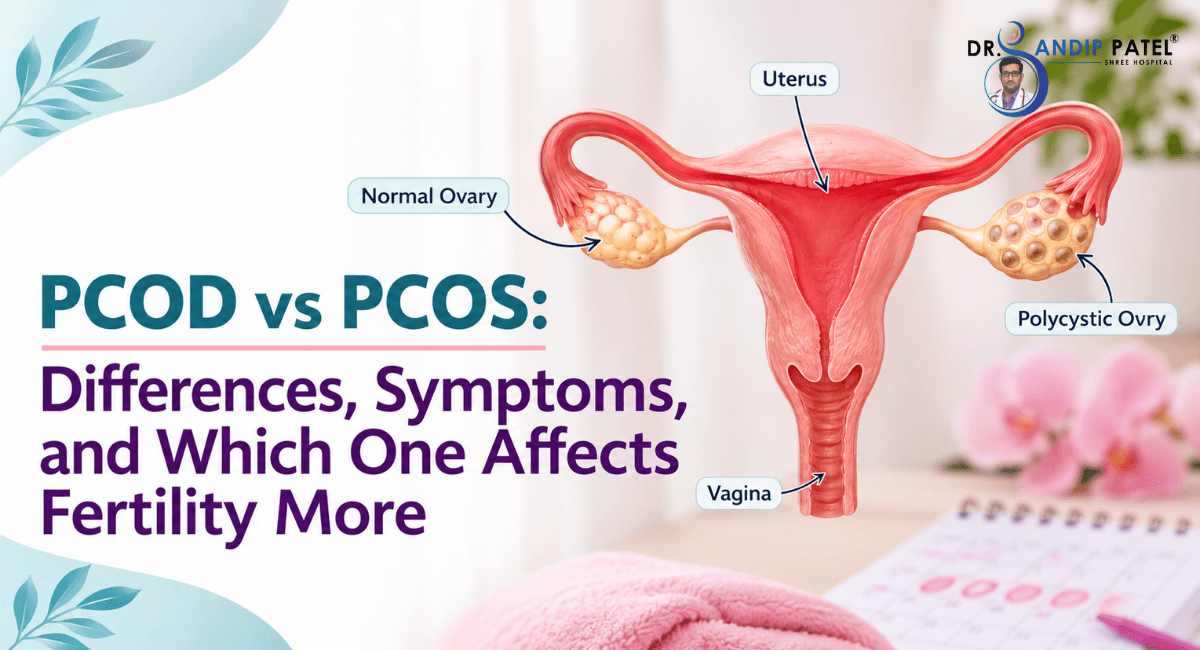
Many women hear the terms PCOD and PCOS during a gynaecology consultation, but are not always sure what they mean. Both are commonly associated with irregular periods, hormonal changes, and concerns about pregnancy. This can create confusion, especially when a woman is planning to conceive.
Understanding PCOD vs PCOS starts with knowing that PCOS is a recognised hormonal condition, while PCOD is a term commonly used in India to describe polycystic ovaries. The terms are often used interchangeably, but a proper medical assessment is important to understand what is actually happening.
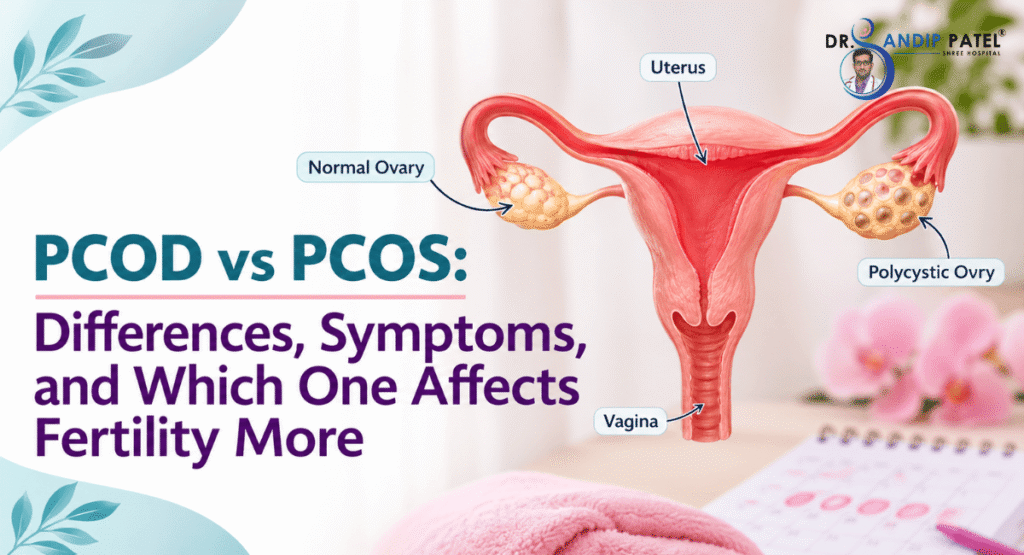
The main difference between PCOD and PCOS is how the terms are used. PCOD usually refers to ovaries that have multiple small follicles, while PCOS refers to a wider hormonal and metabolic condition that can affect ovulation and other aspects of health.
PCOS is not diagnosed through an ultrasound alone. In adults, doctors generally look for at least two features: irregular or absent ovulation, signs of higher androgen levels, and polycystic ovarian appearance on ultrasound or, in suitable cases, AMH testing. Other conditions with similar symptoms may also need to be ruled out.
This is why seeing small follicles on an ultrasound does not automatically mean a woman has PCOS.
The symptoms can vary from one woman to another. Some may have only irregular periods, while others may notice changes in their skin, hair, or weight.
Common PCOD symptoms may include:
PCOS symptoms can include these signs as well as difficulty with regular ovulation, scalp hair thinning, and signs of insulin resistance. Some women may have very few noticeable symptoms.
Both conditions are often discussed in connection with hormonal imbalance in women, but symptoms alone cannot confirm a diagnosis.
When discussing PCOD vs PCOS, fertility is one of the biggest concerns for women planning pregnancy.
PCOS can affect fertility because irregular ovulation means an egg may not be released every month. Without regular ovulation, predicting the fertile window and conceiving naturally may become more difficult.
The term PCOD does not automatically mean fertility will be affected. The impact depends on whether ovulation is regular and whether other fertility factors are present. In general, PCOS and fertility concerns are more clearly linked because ovulation problems are a common feature of the condition.
However, having PCOS does not mean a woman cannot become pregnant. Many women conceive naturally or with medical support.
Treatment depends on symptoms, test results, and whether the woman is planning pregnancy.
PCOD treatment may involve healthy eating, regular physical activity and medical care for menstrual irregularities. If a woman has PCOS, treatment may also address insulin resistance, acne, excess hair growth or ovulation problems.
There is no single treatment that suits everyone. A gynaecologist may recommend lifestyle changes, medication to regulate periods, or treatment to support ovulation when pregnancy is desired. The right PCOD treatment or PCOS management plan should be based on individual needs.
Understanding PCOD vs PCOS can help women recognise changes in their menstrual cycle, manage symptoms, and make informed decisions about their fertility. Knowing the difference between these conditions and getting the right medical guidance can support better reproductive health.
For women’s healthcare and gynaecological guidance, visit Shree Hospital. If you experience irregular periods, persistent acne, excessive facial hair, or difficulty conceiving, contact Shree Hospital Anklav for proper evaluation and treatment advice.
The best laparoscopic surgeon in Anklav is one with proven experience, advanced surgical skills, and a patient-first approach. At Shree Hospital, Dr. Sandip Patel is known for his expertise in minimally invasive gynec surgery and consistent outcomes.
Laparoscopic surgery is commonly used to treat ovarian cysts, fibroids, endometriosis, ectopic pregnancy, and infertility-related conditions. It is also used for diagnosis in certain unclear cases.
Yes, laparoscopic surgery is considered very safe when performed by an experienced laparoscopy specialist. It involves smaller cuts, less pain, and a lower risk of complications compared to open surgery.
Recovery is usually faster than traditional surgery. Most patients can return to normal activities within a few days to a week, depending on the procedure and individual health.
Look for a qualified surgeon with experience in advanced laparoscopic procedures, positive patient outcomes, and access to a well-equipped hospital. Personal consultation also helps you feel confident and informed before treatment.
Let’s discuss your fertility goals and create a personalized treatment plan for you.