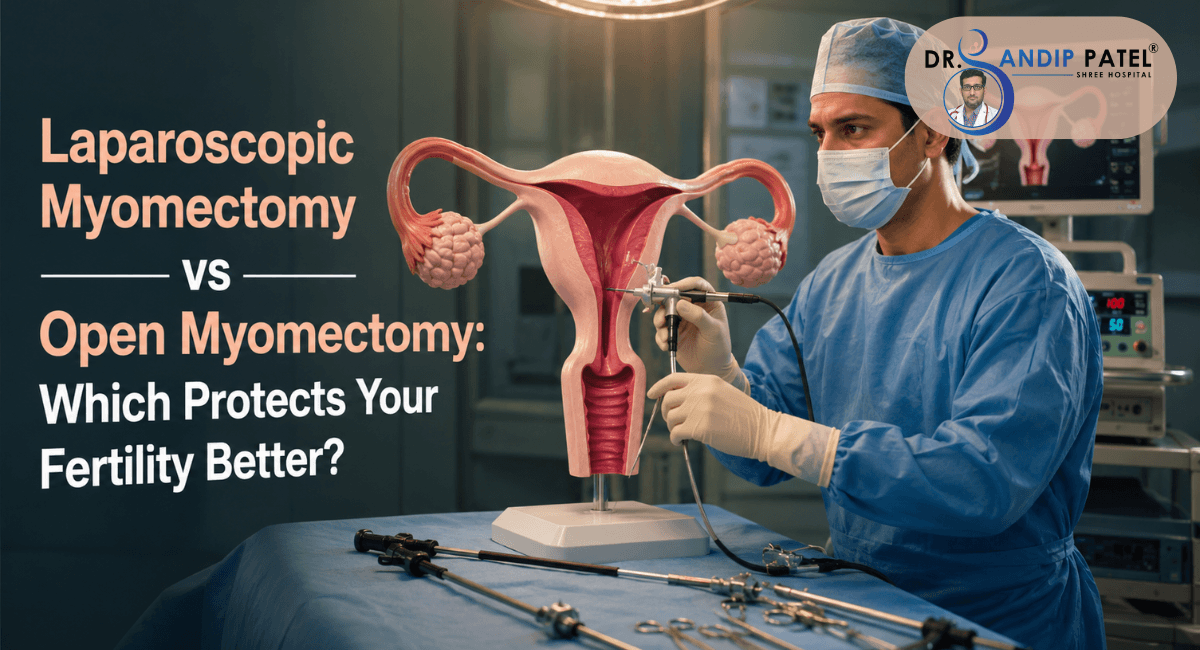
Every Fertility Decision Matters When Fibroids Are Involved
Finding out that you have uterine fibroids can be overwhelming, especially if you are planning to start or expand your family. Many women immediately wonder whether surgery will affect their chances of becoming pregnant. The good news is that modern gynecological treatments focus not only on removing fibroids but also on preserving the uterus and improving fertility whenever possible.
When comparing Laparoscopic Myomectomy vs Open Myomectomy, the right choice depends on several factors, including the size, number, and location of fibroids, as well as your future pregnancy plans. Both procedures can improve fertility, but they differ in surgical approach, recovery time, and overall patient experience.
Understanding these differences can help you make a confident and informed decision alongside your gynecologist.
A myomectomy for fertility is a surgical procedure that removes uterine fibroids while preserving the uterus. Unlike a hysterectomy, which removes the uterus completely, myomectomy allows women to maintain their ability to conceive.
Doctors usually recommend fibroid removal surgery when fibroids cause:
The primary goal is to remove fibroids without damaging healthy uterine tissue.
Laparoscopic myomectomy is a minimally invasive procedure performed through a few small incisions in the abdomen. A surgeon inserts a tiny camera and specialized instruments to remove fibroids while carefully repairing the uterus.
Many women are able to resume routine activities within two to four weeks after laparoscopic fibroid removal, depending on their overall health and the complexity of the surgery.
Open myomectomy is a traditional surgical procedure performed through a larger abdominal incision. It provides direct access to the uterus, making it suitable for women with multiple, large, or deeply embedded fibroids.
Although recovery is longer, open surgery remains a highly effective treatment for complex fibroid cases.
Recovery usually takes four to six weeks, and patients may require a slightly longer hospital stay compared to laparoscopic surgery.
Choosing between Laparoscopic Myomectomy vs Open Myomectomy depends on your individual medical condition rather than one technique being universally better.
Factor | Laparoscopic Myomectomy | Open Myomectomy |
Incision | Small | Larger abdominal incision |
Recovery Time | 2 to 4 weeks | 4 to 6 weeks |
Pain After Surgery | Usually less | Usually more |
Hospital Stay | Shorter | Longer |
Blood Loss | Generally lower | May be higher |
Scarring | Minimal | More noticeable |
Suitable For | Small to medium fibroids | Large or multiple fibroids |
Both surgeries aim to preserve fertility while removing fibroids safely.
One of the biggest concerns women have is fertility after myomectomy.
Research suggests that pregnancy rates after both laparoscopic and open myomectomy are generally comparable when surgery is performed by experienced specialists. The most important factor is complete removal of fibroids while preserving the strength of the uterus.
However, laparoscopic myomectomy may offer additional benefits because it typically causes:
Open myomectomy, however, remains the preferred option for women with very large fibroids or complex uterine anatomy where minimally invasive surgery may not be feasible.
Therefore, the best myomectomy for pregnancy depends on your specific diagnosis rather than the surgical technique alone.
Many women successfully achieve pregnancy after fibroid surgery, especially when fibroids were interfering with implantation or distorting the uterine cavity.
Doctors usually recommend waiting several months before trying to conceive to allow the uterus to heal completely.
Factors influencing pregnancy success include:
Following your gynecologist’s advice regarding recovery and conception timing is essential for a healthy pregnancy.
You may be eligible for laparoscopic fibroid removal if you have:
Your doctor will perform imaging studies, such as ultrasound or MRI, to determine whether minimally invasive surgery is appropriate.
Open surgery may be advised if you have:
Although recovery is longer, open myomectomy often provides excellent long-term outcomes for women with advanced fibroid disease.
Some women conceive naturally after surgery, while others may benefit from assisted reproductive techniques.
If pregnancy does not occur after adequate recovery, your fertility specialist may recommend IVF depending on factors such as age, ovarian reserve, or male partner fertility.
Patients often ask about the IVF treatment cost in Anklav, but the overall cost depends on several factors, including investigations, medications, treatment protocols, and individual fertility needs. A consultation with a fertility expert can provide a personalized treatment plan and estimated costs.
When comparing Laparoscopic Myomectomy vs Open Myomectomy, there is no single answer that suits every woman. Both procedures effectively remove fibroids while preserving the uterus, and both can improve fertility when selected appropriately.
For women with smaller and fewer fibroids, laparoscopic myomectomy often provides quicker recovery and less postoperative discomfort. For larger or more complex fibroids, open myomectomy remains a reliable and highly effective surgical option.
The decision should always be based on your medical condition, fertility goals, and your gynecologist’s recommendation.
With Shree Hospital Anklav, our experienced gynecology team provides comprehensive evaluation and personalized treatment for uterine fibroids, fertility concerns, and advanced uterine fibroid surgery. Whether you require minimally invasive laparoscopic myomectomy, traditional fibroid removal surgery, or fertility guidance, we are committed to helping you receive safe, compassionate, and evidence-based care. Schedule a consultation today to discuss the most suitable treatment plan and take a confident step toward protecting your reproductive health.
If you are looking for the best gynecologist in Anklav, choose a hospital that offers comprehensive women’s healthcare, advanced diagnostic facilities, minimally invasive surgical expertise, and personalized fertility guidance.
The best laparoscopic surgeon in Anklav is one with proven experience, advanced surgical skills, and a patient-first approach. At Shree Hospital, Dr. Sandip Patel is known for his expertise in minimally invasive gynec surgery and consistent outcomes.
Laparoscopic surgery is commonly used to treat ovarian cysts, fibroids, endometriosis, ectopic pregnancy, and infertility-related conditions. It is also used for diagnosis in certain unclear cases.
Yes, laparoscopic surgery is considered very safe when performed by an experienced laparoscopy specialist. It involves smaller cuts, less pain, and a lower risk of complications compared to open surgery.
Recovery is usually faster than traditional surgery. Most patients can return to normal activities within a few days to a week, depending on the procedure and individual health.
Look for a qualified surgeon with experience in advanced laparoscopic procedures, positive patient outcomes, and access to a well-equipped hospital. Personal consultation also helps you feel confident and informed before treatment.
Let’s discuss your fertility goals and create a personalized treatment plan for you.