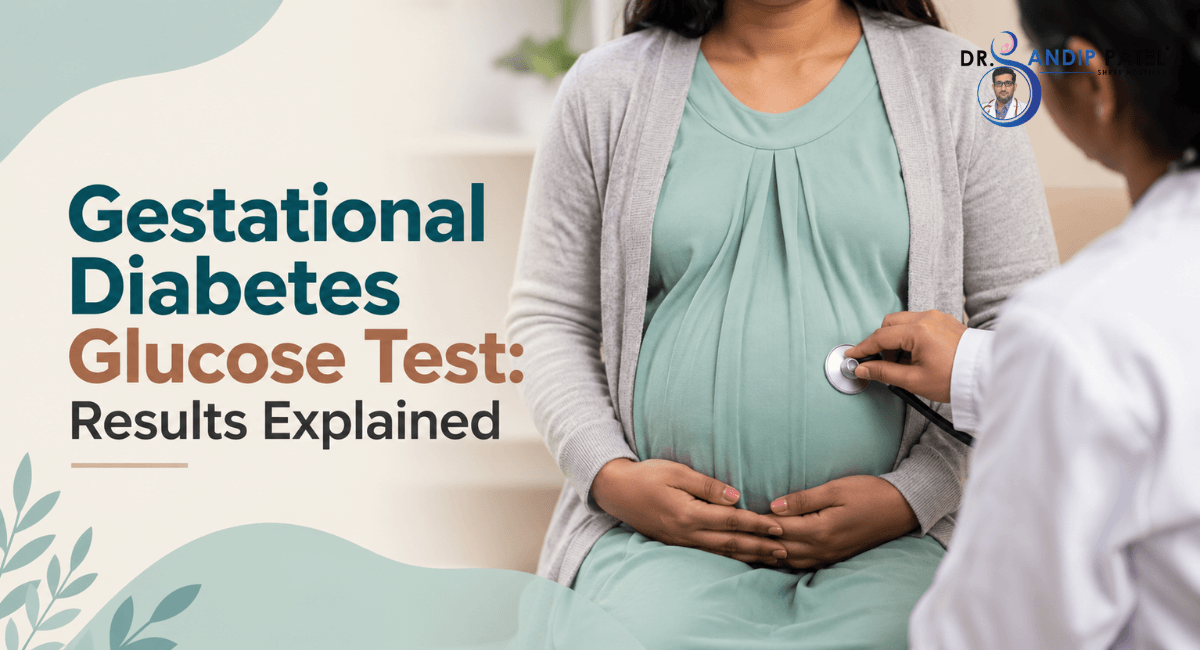
A glucose test during pregnancy can leave you staring at a lab report filled with numbers and wondering, “Is this normal for pregnancy, or does it mean I have gestational diabetes?”
The good news is that a higher-than-expected glucose result does not automatically mean something is seriously wrong. Pregnancy naturally changes the way your body processes glucose, which is why gestational diabetes screening is an important part of prenatal care. Understanding what your numbers mean can help you discuss the next steps confidently with your doctor.
Gestational diabetes mellitus, or GDM, is high blood glucose that develops or is first recognized during pregnancy. It occurs when the body cannot produce enough insulin to overcome the increased insulin resistance that can occur during pregnancy.
According to the World Health Organization, gestational diabetes is characterized by blood glucose levels that are above normal but below the levels used to diagnose diabetes outside pregnancy. It may not cause obvious symptoms, which is why testing is important even when you feel completely well.
Untreated or poorly controlled high blood glucose during pregnancy can increase the risk of complications for both mother and baby. Early identification allows your healthcare team to monitor glucose and recommend appropriate nutrition, activity, monitoring, and medication when needed.
The usual window for gestational diabetes screening is between 24 and 28 weeks of pregnancy. Women with certain risk factors may need assessment earlier, depending on their medical history and their doctor’s recommendations.
Risk factors can include:
Screening approaches differ between countries, hospitals, and medical organizations. Your doctor may recommend a glucose challenge followed by an oral glucose tolerance test, or a 75 g oral glucose tolerance test as the diagnostic test.
The gestational diabetes glucose test checks how your body handles glucose during pregnancy.
One commonly used approach is the oral glucose tolerance test, or OGTT. You may be asked to arrive after fasting, have a blood sample taken, drink a measured glucose solution, and then have another blood sample taken after a specified period.
The test may measure:
The exact preparation and number of blood samples depend on the protocol your healthcare provider uses.
This is where many patients become confused. A glucose value cannot always be interpreted simply as “normal” or “high.” The timing of the blood sample matters.
For a commonly used 75 g OGTT based on WHO/IADPSG criteria, gestational diabetes may be diagnosed when one or more of the following values reaches the specified threshold:
Test measurement | Commonly used GDM threshold |
Fasting glucose | 92–125 mg/dL |
1-hour glucose | 180 mg/dL or higher |
2-hour glucose | 153–199 mg/dL |
Values reaching the diabetes-in-pregnancy range are classified differently. For example, a fasting glucose of 126 mg/dL or higher or a 2-hour value of 200 mg/dL or higher following a 75 g glucose load may indicate diabetes in pregnancy rather than gestational diabetes.
These numbers are useful for understanding your report, but they should not be used to diagnose yourself. Different testing protocols may use different thresholds, including protocols involving a preliminary glucose challenge followed by a longer OGTT.
People often search for normal glucose levels in pregnancy after receiving their test report. However, there is not one single glucose number that applies to every pregnancy or every type of test.
For example, a fasting value is interpreted differently from a one-hour or two-hour post-glucose value. In addition, the target range used for someone already diagnosed with gestational diabetes and monitoring glucose at home can differ from the diagnostic criteria used during an OGTT.
For women managing GDM, the American Diabetes Association lists commonly used treatment targets of 95 mg/dL or less before meals, 140 mg/dL or less one hour after meals, and 120 mg/dL or less two hours after meals, although individual targets should be determined by the healthcare team.
So, if your report shows a number that looks slightly high, do not panic. Look at the test name, whether you were fasting, the timing of the sample, and the reference range provided by the laboratory.
It depends on the test and diagnostic criteria being used.
With the 75 g OGTT criteria described by WHO, one abnormal value can be enough for a diagnosis of GDM.
However, other screening methods use a preliminary glucose challenge test followed by a diagnostic oral glucose tolerance test. This is one reason why comparing your number with a result found online can be misleading.
Your doctor considers the complete report, your pregnancy stage, medical history, symptoms, risk factors, and the testing method before making a gestational diabetes diagnosis.
A diagnosis of gestational diabetes does not mean you cannot have a healthy pregnancy.
Management commonly focuses on controlling blood glucose through a personalized eating plan, appropriate physical activity, glucose monitoring, and medication when necessary. The American Diabetes Association notes that insulin may be used when lifestyle measures alone do not achieve the recommended glucose targets.
Your healthcare team may also monitor your pregnancy more closely and recommend additional checks depending on your glucose control and overall pregnancy health.
The important thing is not to ignore an abnormal result or attempt to manage it without professional guidance.
Keeping glucose within the recommended range matters because high blood glucose during pregnancy is associated with increased risks of complications such as excessive fetal growth, hypertensive disorders, and other pregnancy and newborn complications. Treatment and appropriate monitoring can help reduce these risks.
This is why gestational diabetes test results should be viewed as an opportunity for early action rather than a reason for unnecessary fear.
Gestational diabetes generally relates to the pregnancy, but its importance can continue after delivery. Women who have had GDM have a higher future risk of developing type 2 diabetes, making postpartum follow-up and long-term health monitoring important.
Your doctor can advise you about appropriate postpartum glucose testing and ongoing preventive care.
Speak with your gynecologist if:
Choosing an experienced women’s healthcare specialist can make it easier to understand test results and create a care plan suited to your pregnancy.
For women searching for the Best gynecologist in Anklav, Shree Hospital provides gynecology, pregnancy care, high-risk pregnancy monitoring, and women’s health services with personalized medical guidance.
Gestational diabetes is a pregnancy-related condition and is different from infertility. However, couples undergoing fertility treatment may also need their overall health and metabolic factors assessed before and during pregnancy.
If you are researching IVF treatment cost in Anklav, remember that IVF pricing is not necessarily the same for every patient. Costs can vary depending on medications, the number of cycles, and additional procedures such as ICSI or embryo freezing. Shree Hospital states that an individualized consultation is used to estimate treatment costs based on the patient’s medical requirements.
A glucose test is more than just a number on a laboratory report. It gives your healthcare team valuable information about how your body is handling pregnancy-related changes in glucose metabolism.
If your result is abnormal, the next step is understanding exactly what was tested, when the blood sample was taken, which diagnostic criteria were used, and what your doctor recommends.
At Shree Hospital Anklav, women can access pregnancy care, gynecological services, high-risk pregnancy monitoring, and fertility support under medical supervision. The hospital focuses on personalized evaluation and treatment planning for women’s health at different stages of life.
If you have questions about your gestational diabetes glucose test, pregnancy glucose levels, or your test report, consult a qualified gynecologist rather than interpreting the numbers alone. Early guidance and regular monitoring can help you take informed steps toward a healthier pregnancy.
The best laparoscopic surgeon in Anklav is one with proven experience, advanced surgical skills, and a patient-first approach. At Shree Hospital, Dr. Sandip Patel is known for his expertise in minimally invasive gynec surgery and consistent outcomes.
Laparoscopic surgery is commonly used to treat ovarian cysts, fibroids, endometriosis, ectopic pregnancy, and infertility-related conditions. It is also used for diagnosis in certain unclear cases.
Yes, laparoscopic surgery is considered very safe when performed by an experienced laparoscopy specialist. It involves smaller cuts, less pain, and a lower risk of complications compared to open surgery.
Recovery is usually faster than traditional surgery. Most patients can return to normal activities within a few days to a week, depending on the procedure and individual health.
Look for a qualified surgeon with experience in advanced laparoscopic procedures, positive patient outcomes, and access to a well-equipped hospital. Personal consultation also helps you feel confident and informed before treatment.
Let’s discuss your fertility goals and create a personalized treatment plan for you.