When Every Small Decision Can Make a Big Difference
Being told that you need gynecological surgery can bring many questions to your mind. One of the most common concerns women have today is whether they should choose robotic surgery or laparoscopic surgery. Since both are minimally invasive techniques, it can be difficult to understand how they differ and which option is more suitable for your condition.
The truth is that there is no one size fits all answer. The right choice depends on factors such as your medical condition, the complexity of the surgery, your overall health, and your surgeon’s expertise.
In this guide, we will compare Robotic vs Laparoscopic Gynecological Surgery, explain their advantages and limitations, and help you understand which technique may be recommended for different gynecological conditions.
Laparoscopic gynecological surgery is one of the most widely used minimally invasive surgical techniques.
During the procedure, the surgeon inserts a thin camera called a laparoscope along with surgical instruments through small incisions. The camera projects images onto a monitor, allowing the surgeon to operate with precision.
This technique is commonly used for:
Because it has been practiced successfully for many years, laparoscopic surgery remains the preferred option for many routine gynecological procedures.
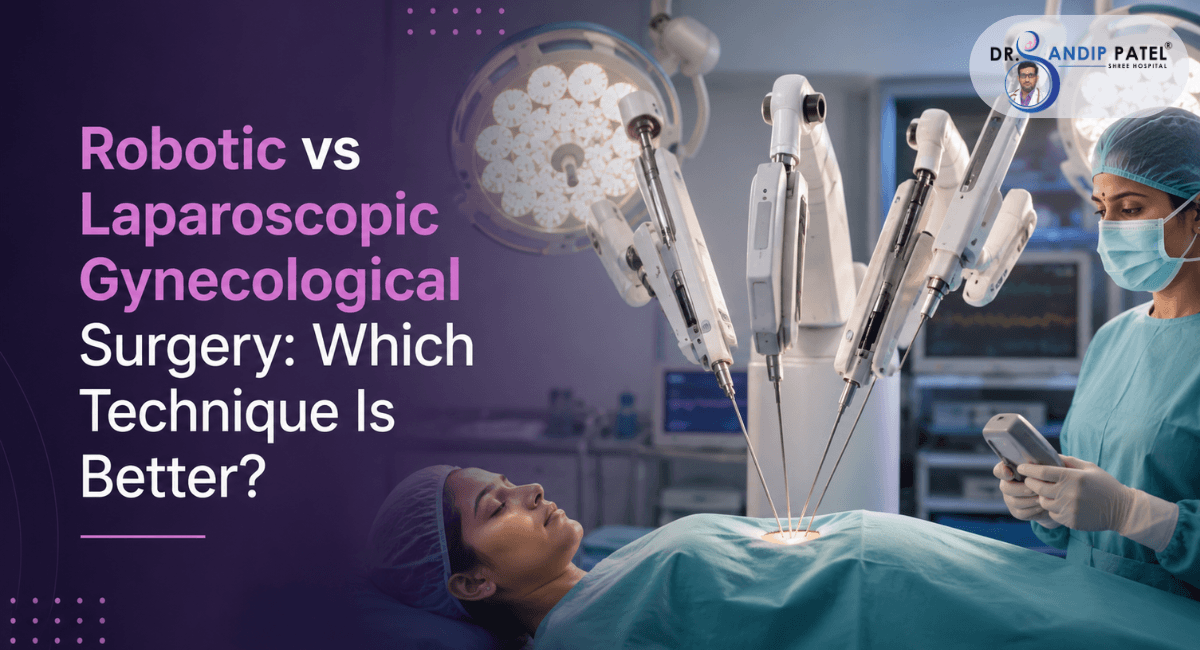
Robotic gynecological surgery is an advanced form of minimally invasive surgery where the surgeon controls robotic arms from a computerized console.
Despite its name, the robot does not perform the surgery independently. Every movement is fully controlled by the surgeon.
The robotic system provides:
This technology is especially beneficial for complex gynecological surgeries that require exceptional accuracy.
Although both techniques share several benefits, understanding their differences can help patients make informed decisions.
Robotic systems offer highly flexible instruments that mimic the movement of the human wrist, allowing surgeons to perform delicate procedures with greater precision.
Laparoscopic surgery also provides excellent outcomes but relies entirely on the surgeon’s manual dexterity.
Robotic surgery provides surgeons with magnified three-dimensional images.
Laparoscopic surgery generally offers two-dimensional visualization, although newer systems may include advanced imaging technologies.
Both procedures usually involve:
In most uncomplicated cases, recovery times are very similar.
For routine surgeries, laparoscopic techniques are often highly effective.
For more complicated cases involving severe endometriosis, multiple fibroids, obesity, or previous surgeries, robotic assistance may provide additional advantages.
Robotic surgery generally costs more because of sophisticated equipment and operating expenses.
Laparoscopic surgery is usually more economical while still delivering excellent clinical outcomes for many patients.
Fibroids are one of the most common conditions requiring surgery. Both robotic surgery for fibroids and laparoscopic surgery for fibroids allow fibroids to be removed without the large incision required in traditional surgery.
For women with large or multiple fibroids, robotic myomectomy may offer better precision while preserving healthy uterine tissue. However, laparoscopic myomectomy continues to provide excellent results for many patients with fewer or smaller fibroids.
The right choice depends on the size, number, and location of the fibroids, along with the surgeon’s recommendation.
Women requiring a hysterectomy often ask whether robotic hysterectomy is better than laparoscopic hysterectomy. Both procedures are performed through small incisions and help patients recover much faster than open surgery.
A robotic hysterectomy may be preferred for more complex surgical cases because of enhanced precision and improved visualization. A laparoscopic hysterectomy remains a highly effective option for many women, offering excellent clinical outcomes with shorter hospital stays and lower treatment costs.
Ultimately, the success of either procedure depends more on surgical expertise than on the technology itself.
There is no single answer that suits every patient. Factors such as your age, overall health, future pregnancy plans, previous surgeries, and the complexity of your condition all influence the most appropriate treatment.
Your gynecologist will carefully evaluate your condition before recommending the safest and most effective surgical approach. Choosing an experienced surgeon with expertise in minimally invasive gynecological surgery is often the most important factor in achieving successful results.
Choosing between robotic and laparoscopic surgery should never be based solely on technology. The right treatment begins with an accurate diagnosis, personalized evaluation, and guidance from an experienced gynecologist.
At Shree Hospital Anklav, our dedicated gynecology team focuses on providing advanced, patient-centered care with minimally invasive treatment options whenever appropriate. From fibroid management and hysterectomy to myomectomy and other complex gynecological procedures, we strive to ensure safer surgeries, faster recovery, and better long-term outcomes for every patient.
If you are looking for the Best gynecologist in Anklav, our specialists are here to discuss your treatment options and help you choose the most suitable surgical approach based on your individual health needs. For couples planning a family, we also offer comprehensive fertility guidance and can provide information about IVF treatment cost in Anklav along with personalized reproductive care.
Schedule a consultation at Shree Hospital Anklav and take the first step toward expert women’s healthcare with confidence.
Choosing the right diagnosis is the first step toward successful treatment. With Shree Hospital, our experienced gynecology team uses advanced diagnostic techniques to accurately distinguish adenomyosis vs fibroids and recommend personalized treatment plans based on every woman’s health goals.
Whether you need expert evaluation for adenomyosis diagnosis, fibroid diagnosis, fertility concerns, or advanced uterine fibroid treatment, our specialists are committed to providing compassionate and evidence-based care. If you are looking for the best gynecologist in Anklav, Shree Hospital offers comprehensive women’s healthcare services designed to support you at every stage of life with modern facilities and patient-focused treatment.
The best laparoscopic surgeon in Anklav is one with proven experience, advanced surgical skills, and a patient-first approach. At Shree Hospital, Dr. Sandip Patel is known for his expertise in minimally invasive gynec surgery and consistent outcomes.
Laparoscopic surgery is commonly used to treat ovarian cysts, fibroids, endometriosis, ectopic pregnancy, and infertility-related conditions. It is also used for diagnosis in certain unclear cases.
Yes, laparoscopic surgery is considered very safe when performed by an experienced laparoscopy specialist. It involves smaller cuts, less pain, and a lower risk of complications compared to open surgery.
Recovery is usually faster than traditional surgery. Most patients can return to normal activities within a few days to a week, depending on the procedure and individual health.
Look for a qualified surgeon with experience in advanced laparoscopic procedures, positive patient outcomes, and access to a well-equipped hospital. Personal consultation also helps you feel confident and informed before treatment.
Let’s discuss your fertility goals and create a personalized treatment plan for you.