Women’s health conditions often present with similar symptoms, making it difficult to identify the actual cause without proper medical evaluation. Heavy menstrual bleeding, pelvic pain, painful periods, and difficulty conceiving can all point to different gynecological conditions. Among the most commonly confused are adenomyosis vs fibroids.
Although both conditions affect the uterus and may cause similar symptoms, they are entirely different in their nature, diagnosis, and treatment. Understanding the difference between adenomyosis and fibroids helps women seek timely medical care and receive the most appropriate treatment before complications arise.
In this article, we explain how doctors distinguish between these two conditions, the latest diagnostic methods, and the treatment options available for each.
Adenomyosis is a condition in which the tissue that normally lines the inside of the uterus (the endometrium) starts growing into the muscular wall of the uterus. As this tissue continues to respond to monthly hormonal changes, it causes inflammation, enlargement of the uterus, and significant discomfort.
This condition is more common in women between the ages of 35 and 50, although younger women can also develop it.
Women with adenomyosis may experience:
The severity of adenomyosis symptoms varies from one woman to another. Some women have mild discomfort, while others experience symptoms that interfere with daily life.
Uterine fibroids are non-cancerous growths that develop from the muscle tissue of the uterus. They may appear as a single fibroid or multiple fibroids of varying sizes.
Fibroids are extremely common among women of reproductive age, and many women may not even realize they have them until they undergo a routine pelvic examination.
Depending on their size and location, fibroid symptoms may include:
Some fibroids remain small and symptom-free, while larger ones can significantly affect a woman’s quality of life.
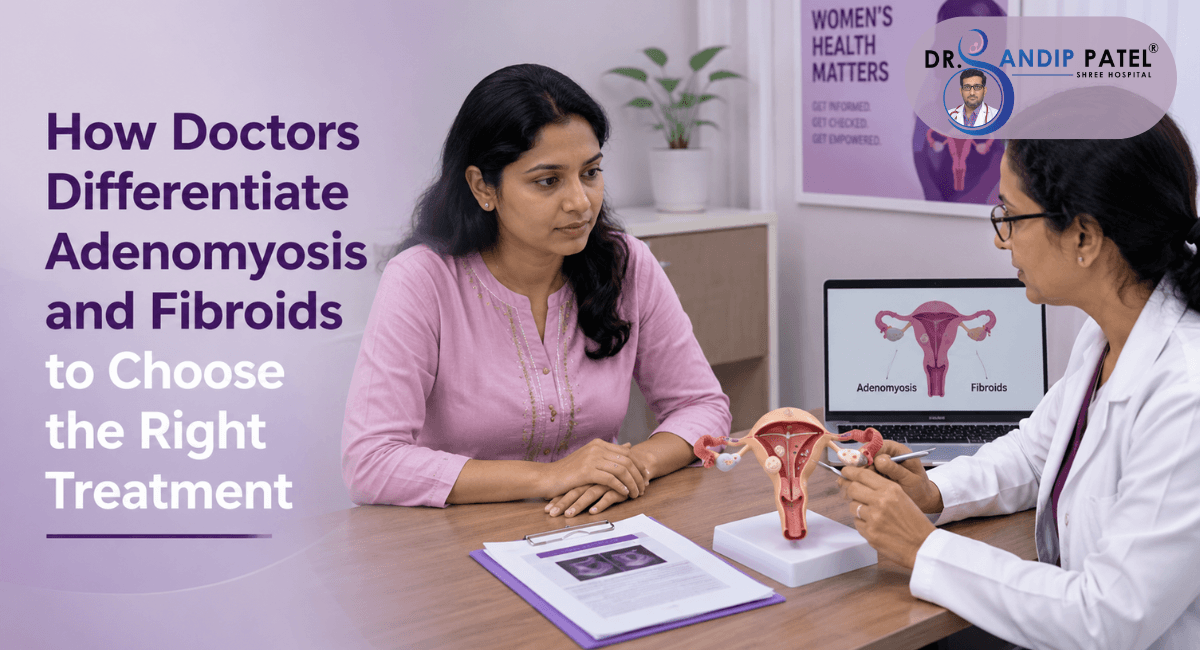
Although both conditions affect the uterus, doctors carefully evaluate several characteristics before making a diagnosis.
Adenomyosis | Fibroids |
Endometrial tissue grows into the uterine muscle | Benign tumors grow within the uterine muscle |
Causes uniform enlargement of the uterus | Creates distinct lumps or masses |
Diffuse involvement throughout the uterus | Localized growths |
More commonly causes severe menstrual pain | More commonly causes pressure symptoms |
Difficult to identify without imaging | Usually easier to detect through ultrasound |
Recognizing the difference between adenomyosis and fibroids is essential because treatment plans differ significantly.
Proper diagnosis begins with understanding the patient’s medical history, menstrual cycle, symptoms, and reproductive goals.
Doctors ask questions regarding:
These details provide important clues before imaging tests are recommended.
During a physical examination, the doctor evaluates the size, shape, and tenderness of the uterus.
Women with adenomyosis often have a uniformly enlarged uterus, while fibroids usually create irregular enlargement due to distinct masses.
Ultrasound is usually the first imaging investigation.
For fibroid diagnosis, ultrasound can clearly identify:
For adenomyosis diagnosis, ultrasound may reveal:
However, adenomyosis can sometimes be difficult to identify through ultrasound alone.
MRI provides highly detailed images of the uterus and is often recommended when ultrasound findings are unclear.
MRI helps doctors confidently distinguish adenomyosis vs fibroids, especially when both conditions exist together.
Doctors may also recommend:
These investigations help create a personalized treatment plan.
Yes. Many women have both conditions at the same time.
When adenomyosis and fibroids coexist, symptoms are often more severe, making accurate diagnosis even more important. Advanced imaging allows gynecologists to determine which condition contributes most to the symptoms and develop the most effective treatment strategy.
The right adenomyosis treatment depends on several factors, including age, symptom severity, future pregnancy plans, and overall health.
Treatment may include:
Medications
Doctors may prescribe:
These options help reduce pain and heavy bleeding.
Minimally Invasive Procedures
In selected patients, procedures that preserve the uterus may help relieve symptoms while maintaining fertility.
Surgery
For women with severe symptoms who have completed their families, hysterectomy may provide permanent relief.
The ideal fibroid treatment depends on the number, size, and location of the fibroids.
Medical Management
Small fibroids with mild symptoms can often be managed using medications that control bleeding and pain.
Minimally Invasive Procedures
Several uterus-preserving treatments are available, including:
Surgical Treatment
When fibroids are large or multiple, surgery may be recommended.
Common surgical options include:
Modern uterine fibroid treatment focuses on relieving symptoms while considering future pregnancy plans whenever possible.
Both adenomyosis and fibroids can influence fertility, although the impact varies.
Fibroids may interfere with implantation depending on their location, while adenomyosis can affect the uterine environment, making pregnancy more challenging.
Women planning pregnancy should consult a gynecologist early for appropriate evaluation. In cases where fertility treatment becomes necessary, understanding factors such as IVF treatment cost in Anklav and available reproductive care options can help couples make informed decisions.
Do not ignore persistent symptoms such as:
Early diagnosis often leads to more effective treatment and helps prevent complications.
Choosing the right diagnosis is the first step toward successful treatment. With Shree Hospital, our experienced gynecology team uses advanced diagnostic techniques to accurately distinguish adenomyosis vs fibroids and recommend personalized treatment plans based on every woman’s health goals.
Whether you need expert evaluation for adenomyosis diagnosis, fibroid diagnosis, fertility concerns, or advanced uterine fibroid treatment, our specialists are committed to providing compassionate and evidence-based care. If you are looking for the best gynecologist in Anklav, Shree Hospital offers comprehensive women’s healthcare services designed to support you at every stage of life with modern facilities and patient-focused treatment.
The best laparoscopic surgeon in Anklav is one with proven experience, advanced surgical skills, and a patient-first approach. At Shree Hospital, Dr. Sandip Patel is known for his expertise in minimally invasive gynec surgery and consistent outcomes.
Laparoscopic surgery is commonly used to treat ovarian cysts, fibroids, endometriosis, ectopic pregnancy, and infertility-related conditions. It is also used for diagnosis in certain unclear cases.
Yes, laparoscopic surgery is considered very safe when performed by an experienced laparoscopy specialist. It involves smaller cuts, less pain, and a lower risk of complications compared to open surgery.
Recovery is usually faster than traditional surgery. Most patients can return to normal activities within a few days to a week, depending on the procedure and individual health.
Look for a qualified surgeon with experience in advanced laparoscopic procedures, positive patient outcomes, and access to a well-equipped hospital. Personal consultation also helps you feel confident and informed before treatment.
Let’s discuss your fertility goals and create a personalized treatment plan for you.