You have completed every recommended fertility test. Blood reports are normal. Ovulation is regular. Ultrasound scans look healthy. The Fallopian tubes appear open, and your partner’s semen analysis shows no concerns. Yet, month after month, pregnancy does not happen.
This situation can be emotionally exhausting and confusing. Many couples are told they have unexplained infertility, a diagnosis that simply means the reason behind infertility has not been identified through standard investigations.
In such cases, Diagnostic Laparoscopy for Infertility becomes an important next step. It allows gynecologists to look inside the pelvis and identify conditions that often remain hidden during routine scans and tests. The procedure not only provides accurate answers but also helps doctors decide the most suitable fertility treatment moving forward.
In this article, we will explain how diagnostic laparoscopy works, who may need it, what it can reveal, and how it supports a successful fertility journey.
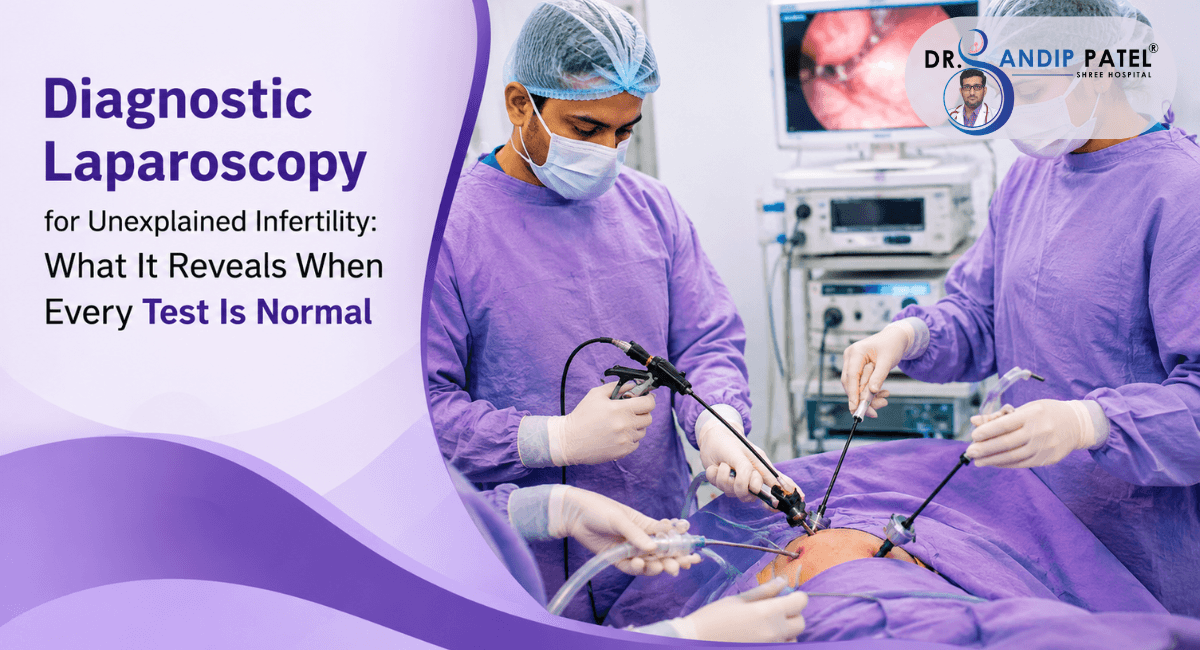
Diagnostic laparoscopy is a minimally invasive surgical procedure that enables a gynecologist to examine the reproductive organs directly. A small camera called a laparoscope is inserted through a tiny incision near the navel, allowing detailed visualization of the uterus, ovaries, fallopian tubes, and surrounding pelvic structures.
Unlike ultrasound or X-rays, laparoscopy for infertility gives a clear, real-time view of conditions that may not be visible on imaging tests.
Because of its precision, it plays an important role in the female infertility diagnosis process, particularly when no obvious cause has been found.
Around 10 to 20 percent of infertility cases are classified as unexplained infertility. This diagnosis does not mean there is no problem. It simply means that conventional infertility tests for women have not identified the underlying cause.
Routine fertility evaluations usually include:
Although these tests are highly valuable, they cannot always detect certain pelvic abnormalities. This is where the diagnostic laparoscopy procedure offers additional clarity.
One of the greatest advantages of Diagnostic Laparoscopy for Infertility is its ability to uncover conditions that are difficult or impossible to detect through routine imaging.
Mild or moderate endometriosis may not appear on ultrasound scans. During laparoscopy, doctors can identify small endometrial implants, inflammation, or scar tissue affecting fertility.
Treating endometriosis during the same procedure may improve the chances of natural conception.
Scar tissue caused by previous infections, surgeries, or inflammation can restrict the normal movement of reproductive organs.
These adhesions may interfere with egg release or prevent the egg and sperm from meeting successfully.
While HSG can suggest whether tubes are open, laparoscopy provides direct visualization of the tubes and surrounding tissues.
It can reveal partial blockages, damage, or external compression that routine tests may miss.
Small cysts or ovarian abnormalities affecting fertility can be evaluated more accurately during the procedure.
Previous infections may leave behind subtle damage that does not produce noticeable symptoms but still affects fertility.
Certain structural abnormalities of the reproductive organs become easier to diagnose through direct visualization.
These are some of the hidden causes of infertility that often explain why conception has not occurred despite normal fertility reports.
Not every couple with infertility requires laparoscopy immediately. It is generally recommended after a thorough fertility evaluation when pregnancy still does not occur.
Your gynecologist may recommend laparoscopy for infertility if you have:
A consultation with an experienced fertility specialist helps determine whether this investigation is appropriate for your situation.
The diagnostic laparoscopy procedure is usually performed under general anesthesia.
The process generally includes:
The surgery usually takes around 30 to 60 minutes, depending on the findings.
Recovery from diagnostic laparoscopy is generally quicker than traditional open surgery.
Most women:
Following your doctor’s recovery instructions helps ensure proper healing and reduces the risk of complications.
Yes, in many situations it can.
One of the unique benefits of Diagnostic Laparoscopy for Infertility is that it is both diagnostic and therapeutic.
If the surgeon identifies conditions such as:
they may often be treated immediately during the same surgery.
For some women, fertility improves naturally after these issues are corrected. For others, the findings help fertility specialists recommend the most effective treatment plan, whether it involves ovulation induction, intrauterine insemination (IUI), or IVF.
Rather than continuing unsuccessful treatments without answers, laparoscopy helps create a targeted fertility strategy.
Not every patient requires laparoscopy before IVF.
However, it may be recommended if there are symptoms suggesting endometriosis, pelvic disease, or when previous fertility treatments have repeatedly failed without explanation.
By identifying problems beforehand, doctors can improve treatment planning and avoid unnecessary delays.
If you are also considering fertility treatments, discussing the IVF treatment cost in Anklav along with the appropriate diagnostic approach can help you make informed decisions about your fertility journey.
Accurate diagnosis is the foundation of successful fertility treatment. An experienced specialist can decide whether laparoscopy is truly needed and interpret the findings correctly to create an effective treatment plan.
If you are searching for the Best gynecologist in Anklav, choose a healthcare provider with expertise in infertility evaluation, minimally invasive gynecological surgery, and personalized fertility care.
Living with unexplained infertility can feel overwhelming, especially when every report appears normal. However, hidden conditions may still be preventing pregnancy, and identifying them early can make a significant difference.
With Shree Hospital, our experienced gynecologists provide comprehensive female infertility diagnosis, advanced diagnostic laparoscopy services, and personalized fertility care to help couples understand the real cause of infertility. From accurate diagnosis to complete treatment guidance, our team is committed to supporting you at every stage of your parenthood journey. If you are looking for trusted care from the Best gynecologist in Anklav, schedule your consultation today and take the first step toward finding the answers you deserve.
The best laparoscopic surgeon in Anklav is one with proven experience, advanced surgical skills, and a patient-first approach. At Shree Hospital, Dr. Sandip Patel is known for his expertise in minimally invasive gynec surgery and consistent outcomes.
Laparoscopic surgery is commonly used to treat ovarian cysts, fibroids, endometriosis, ectopic pregnancy, and infertility-related conditions. It is also used for diagnosis in certain unclear cases.
Yes, laparoscopic surgery is considered very safe when performed by an experienced laparoscopy specialist. It involves smaller cuts, less pain, and a lower risk of complications compared to open surgery.
Recovery is usually faster than traditional surgery. Most patients can return to normal activities within a few days to a week, depending on the procedure and individual health.
Look for a qualified surgeon with experience in advanced laparoscopic procedures, positive patient outcomes, and access to a well-equipped hospital. Personal consultation also helps you feel confident and informed before treatment.
Let’s discuss your fertility goals and create a personalized treatment plan for you.