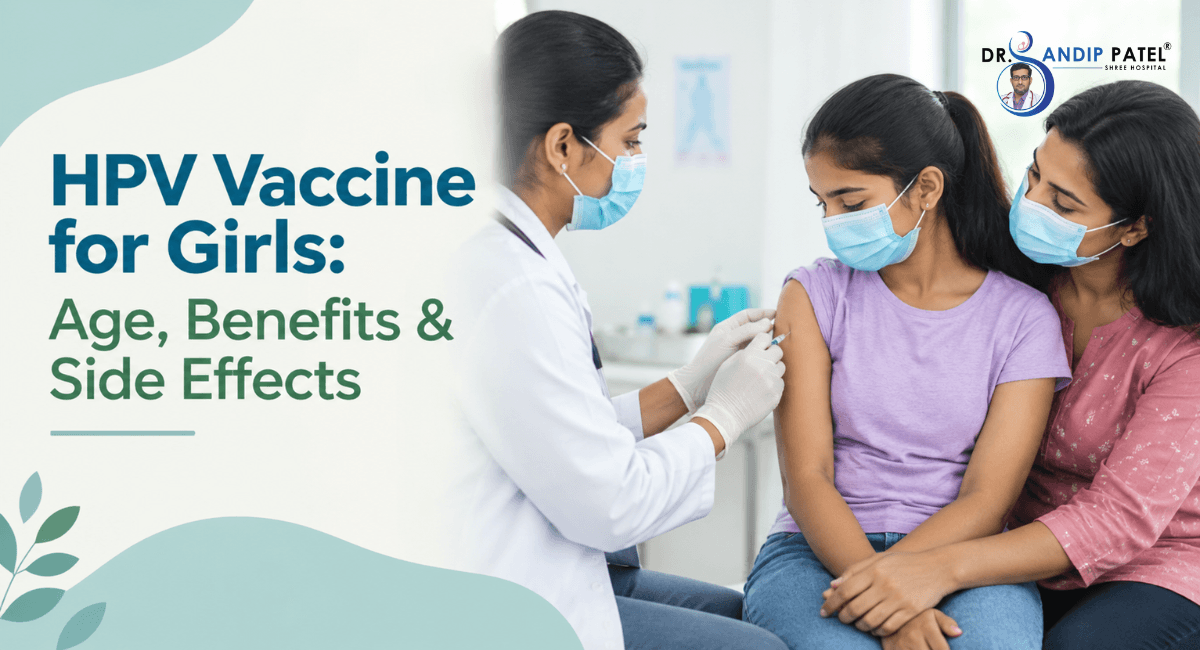
Cervical cancer is one of the most common cancers in Indian women, but it is largely preventable with timely vaccination and regular screening. The HPV vaccine for girls is one of the most effective ways to protect against certain types of human papillomavirus (HPV), which can cause cervical cancer. Many parents may not know when their daughters should receive this vaccine or how it helps protect their future health. Understanding the recommended vaccination age, its benefits, and possible side effects can help parents make informed decisions and take the right steps towards protecting their daughters.
HPV stands for Human Papillomavirus. It is a very common virus that spreads through intimate skin-to-skin contact. Most infections clear on their own. But some types, mainly HPV 16 and 18, can stay in the body for years and cause cervical cancer. Other types, such as HPV 6 and 11, cause genital warts.
The vaccine teaches the body to fight HPV before the virus ever enters. It does not treat an infection that is already present, which is why it works best when given early. It is one of the most important vaccine for adolescents because it protects against cancer later in life.
The ideal HPV vaccine age for girls is 9 to 14 years, before any exposure to the virus. At this age, the body responds strongly to the vaccine, and fewer doses are needed.
Older girls and young women can also take the vaccine after talking to a doctor, though protection is best when it is given early.
The HPV vaccine for girls is recommended for:
Girls who have already completed the full course do not need it again. Tell the doctor first if the girl has a high fever, is pregnant, or has had a severe allergic reaction to a vaccine before.
The main HPV vaccine benefits are:
The HPV vaccine for girls has been used in many countries for years and has a strong safety record.
Most HPV vaccine side effects are mild and go away in a day or two:
Fainting can happen after any injection, so let the girl sit and rest for 15 minutes afterwards. Serious allergic reactions are very rare. Go to a doctor right away if she has trouble breathing, swelling of the face, or a very high fever.
Even after HPV vaccination for girls, regular screening is needed in adult life. The vaccine does not cover every HPV type. Women should see a gynecologist for a Pap smear or HPV test as advised, usually starting around age 30.
Cervical cancer prevention starts in childhood. If your daughter is between 9 and 14, this is the right time to talk to a doctor about the HPV vaccine for girls. Questions about doses, age or side effects are best answered by a qualified gynecologist who can look at her individual health.
At Shree Hospital, Anklav, you can get friendly, professional guidance for your daughter’s health. Contact us for HPV vaccination for girls and take a simple step towards protecting her future.
The best laparoscopic surgeon in Anklav is one with proven experience, advanced surgical skills, and a patient-first approach. At Shree Hospital, Dr. Sandip Patel is known for his expertise in minimally invasive gynec surgery and consistent outcomes.
Laparoscopic surgery is commonly used to treat ovarian cysts, fibroids, endometriosis, ectopic pregnancy, and infertility-related conditions. It is also used for diagnosis in certain unclear cases.
Yes, laparoscopic surgery is considered very safe when performed by an experienced laparoscopy specialist. It involves smaller cuts, less pain, and a lower risk of complications compared to open surgery.
Recovery is usually faster than traditional surgery. Most patients can return to normal activities within a few days to a week, depending on the procedure and individual health.
Look for a qualified surgeon with experience in advanced laparoscopic procedures, positive patient outcomes, and access to a well-equipped hospital. Personal consultation also helps you feel confident and informed before treatment.
Let’s discuss your fertility goals and create a personalized treatment plan for you.