What if you could preserve some of your reproductive potential today and keep more options open for tomorrow?
For many women, life does not always follow a predictable timeline. Career goals, education, personal circumstances, medical treatment, or simply not being ready to start a family can influence when someone wants to have children. At the same time, fertility naturally changes with age, particularly because both the number and quality of eggs decline over time. This is where egg freezing can become an option for fertility preservation.
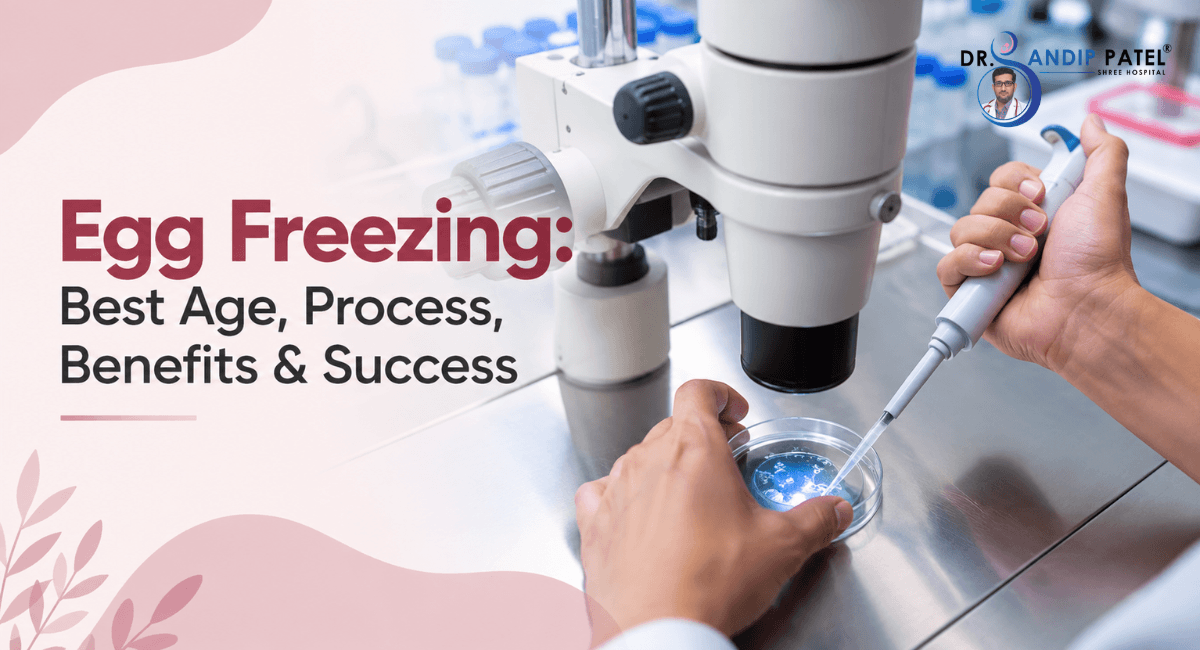
Egg freezing, medically known as oocyte cryopreservation, involves collecting mature eggs from the ovaries and freezing them for possible use in the future. Modern vitrification, a rapid freezing technique, has improved the survival of eggs after thawing compared with older freezing methods. However, egg freezing is not a guarantee of future pregnancy, and its potential benefit depends on factors such as age at freezing, ovarian reserve, the number of eggs preserved, and future reproductive circumstances.
Egg freezing is a fertility preservation technique that allows mature eggs to be collected, frozen and stored for potential future use.
When a woman decides to use her frozen eggs, they are thawed in a fertility laboratory. Eggs that survive the thawing process can then be fertilized with sperm, usually through intracytoplasmic sperm injection (ICSI), to create embryos. An embryo may subsequently be transferred to the uterus as part of fertility treatment.
One important advantage is that egg freezing preserves the eggs available at the time they are frozen. It does not stop the natural aging of the woman’s body or guarantee that pregnancy will occur later. Therefore, understanding the best age for egg freezing is an important part of making an informed decision.
There is no single age that is medically considered perfect for every woman. However, evidence consistently shows that a younger age at the time of egg freezing is associated with better outcomes than freezing eggs at an older age.
The quality and quantity of eggs generally decline with reproductive aging. ASRM guidance notes that available evidence suggests ongoing pregnancy and live birth outcomes are better when planned egg freezing is performed at a younger age, although there is not enough evidence to establish one universal “optimal age” for everyone.
For this reason, women considering fertility preservation are often encouraged to discuss egg freezing before the later reproductive years, rather than waiting until fertility has already declined significantly.
Age alone, however, should not determine whether egg freezing is appropriate. A fertility specialist may also consider ovarian reserve, medical history, previous ovarian surgery, family-building plans and other individual factors.
So, who should consider egg freezing?
Egg freezing may be discussed with women who want to preserve their reproductive options for the future. Common situations include:
The HFEA also identifies medical treatments that may affect fertility and personal circumstances associated with delaying parenthood in situations in which egg freezing may be considered.
A consultation is important because egg freezing is not automatically recommended for every woman. A specialist can help assess whether fertility preservation is suitable based on individual circumstances.
The egg freezing process is similar to the egg-retrieval stage of an IVF cycle and usually involves several carefully monitored steps.
The first step is an evaluation of reproductive health. Depending on the individual’s situation, this may include medical history, ultrasound assessment and ovarian reserve testing.
Hormonal medicines are used to stimulate the ovaries so that multiple follicles can develop during one menstrual cycle. Regular monitoring helps the fertility team assess follicle growth and determine when the eggs are ready for retrieval.
Once the follicles reach the appropriate stage, medication is given to trigger final egg maturation. The mature eggs are then collected through an egg-retrieval procedure, generally under sedation or anesthesia.
The mature eggs are prepared with cryoprotective solutions and rapidly frozen using vitrification. They are then stored at very low temperatures for future use.
When the woman decides to attempt pregnancy using the stored eggs, the eggs are thawed. Suitable eggs can be fertilized with sperm, commonly using ICSI, and resulting embryos may be considered for transfer.
The exact treatment plan varies from one patient to another.
The potential egg freezing benefits are primarily related to preserving reproductive options.
One important benefit is that egg freezing can allow a woman to preserve eggs at a younger age, when egg quality may be better than it would be several years later. It can also provide an option for women who need fertility preservation before potentially fertility-affecting medical treatment.
Egg freezing can also provide greater flexibility because the eggs remain unfertilized. This means a woman can generally decide later which sperm source to use, subject to applicable medical and legal considerations.
However, it is important to understand that preservation does not equal a guaranteed future baby.
One of the most common questions is about egg freezing success rates.
There is no single success percentage that applies to every woman. Outcomes depend on several factors, especially age when the eggs were frozen and the number of mature eggs stored. Clinic-specific laboratory performance and future treatment factors can also influence outcomes.
ASRM states that available evidence is still insufficient to accurately predict an individual woman’s eventual live birth probability after planned egg freezing. Research also indicates that outcomes tend to be better when eggs are frozen at a younger age.
This is why women should be cautious about websites or advertisements that present egg freezing as a guaranteed way to have a baby later. A fertility specialist should explain realistic expectations using the patient’s age, ovarian reserve, anticipated egg yield and the clinic’s own outcome data.
The egg freezing cost can vary considerably depending on the fertility centre and the patient’s treatment plan.
The total expense may include consultation, fertility testing, medications for ovarian stimulation, monitoring, egg retrieval, laboratory procedures, vitrification and storage. Additional expenses may apply if more than one stimulation cycle is required or when the frozen eggs are eventually used for IVF treatment.
Similarly, IVF treatment cost in Anklav varies depending on the patient’s medical condition, medications, number of treatment cycles and additional procedures such as ICSI or embryo freezing. Shree Hospital notes that an individualized consultation is needed to determine an estimated IVF cost based on the patient’s medical profile.
Instead of choosing a clinic based only on an advertised price, patients should ask what is included in the quoted package and which expenses may be additional.
No. This is one of the most important points to understand.
Egg freezing can preserve eggs for potential future use, but not every frozen egg will survive thawing, fertilize, develop into a viable embryo or result in a live birth. Age at freezing and the number of eggs stored are important factors.
ASRM specifically recommends that patients be informed about the uncertainties surrounding planned egg freezing, including its effectiveness, costs, and potential risks.
Therefore, egg freezing should be viewed as a fertility preservation option rather than an insurance policy against future infertility.
At Shree Hospital, Anklav, fertility and women’s healthcare are approached with personalized medical guidance. The hospital provides infertility care and fertility preservation options alongside treatments such as IVF, ICSI, IUI, and ovulation induction.
If you are considering egg freezing for women, planning pregnancy for a later stage of life, or need fertility preservation before medical treatment, an early consultation can help you understand your options.
Your fertility journey is personal, and there is no universal timeline that works for everyone. Understanding your reproductive health today can help you make informed decisions about tomorrow.
The best laparoscopic surgeon in Anklav is one with proven experience, advanced surgical skills, and a patient-first approach. At Shree Hospital, Dr. Sandip Patel is known for his expertise in minimally invasive gynec surgery and consistent outcomes.
Laparoscopic surgery is commonly used to treat ovarian cysts, fibroids, endometriosis, ectopic pregnancy, and infertility-related conditions. It is also used for diagnosis in certain unclear cases.
Yes, laparoscopic surgery is considered very safe when performed by an experienced laparoscopy specialist. It involves smaller cuts, less pain, and a lower risk of complications compared to open surgery.
Recovery is usually faster than traditional surgery. Most patients can return to normal activities within a few days to a week, depending on the procedure and individual health.
Look for a qualified surgeon with experience in advanced laparoscopic procedures, positive patient outcomes, and access to a well-equipped hospital. Personal consultation also helps you feel confident and informed before treatment.
Let’s discuss your fertility goals and create a personalized treatment plan for you.