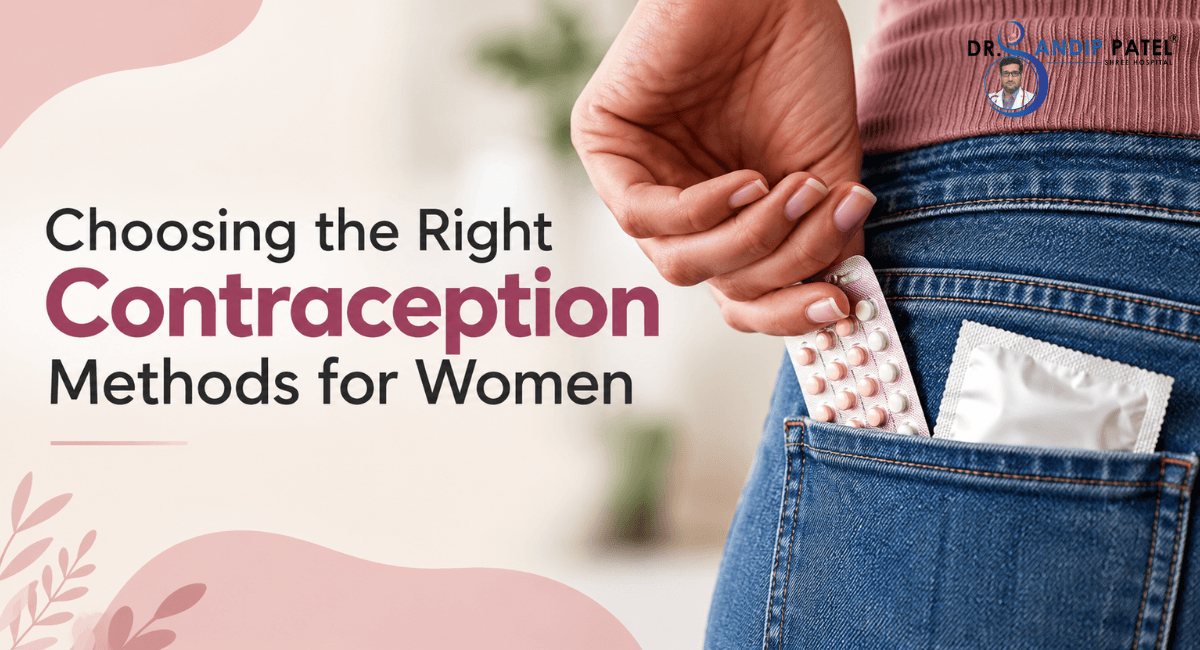
Choosing contraception is not simply about preventing pregnancy. It is about finding an option that fits your health, future family plans, comfort, routine, relationship, and personal preferences. With so many contraception methods available today, it is completely normal to wonder which option is right for you.
Some women prefer a method that requires little daily attention, while others want something they can start or stop themselves. Some may prefer hormonal contraception, while others may specifically look for non-hormonal options.
The good news is that there are several safe and effective birth control methods available. Understanding the different choices can help you have a more informed conversation with your gynecologist.
Contraception refers to methods used to prevent pregnancy. These methods work in different ways. Some prevent ovulation, some prevent sperm from reaching an egg, while others create conditions that make fertilization less likely.
According to the World Health Organization, modern contraception includes temporary and permanent methods, and the right choice depends on a person’s health, preferences, and individual needs.
There is no single method that is suitable for everyone. Your age, menstrual cycle, medical history, medications, future pregnancy plans, lifestyle, and risk of sexually transmitted infections can all influence your choice.
Knowing the types of contraception available is the first step toward making an informed decision.
Hormonal methods use hormones such as estrogen or progestin to prevent pregnancy. Common options include:
Birth control pills generally need to be taken regularly, while injections are given at scheduled intervals. Hormonal IUDs and implants require a healthcare professional for placement but provide contraception for an extended period.
For women who have difficulty remembering a daily pill, a longer-lasting method may fit their routine better.
If you prefer hormonal vs non-hormonal contraception options, non-hormonal methods may be worth discussing with your gynecologist.
These include:
The copper IUD does not contain hormones and can provide long-term pregnancy prevention. Condoms have an additional benefit because they can help reduce the risk of sexually transmitted infections. WHO notes that condoms are the only contraceptive method that also protects against STIs, including HIV.
For women who want reliable contraception without having to remember something every day, long-acting reversible contraception, commonly called LARC, may be an option.
LARC includes intrauterine devices and contraceptive implants. These methods can remain effective for several years, depending on the specific product, and can be removed when pregnancy is desired. ACOG identifies IUDs and implants as highly effective reversible birth control options.
A hormonal IUD releases progestin, while a copper IUD does not contain hormones. An implant is a small device placed under the skin of the upper arm and releases progestin.
These methods can be particularly convenient for women who:
However, LARC methods require professional insertion and removal, so discussing your medical history with a gynecologist is important.
Choosing the right contraception involves more than comparing effectiveness. Think about how the method fits into your everyday life.
If you may want children in the near future, a reversible method may be appropriate. Pills, implants, IUDs, condoms, and other reversible methods can be stopped or discontinued when pregnancy is desired.
If you have completed your family and do not want future pregnancies, permanent contraception may be discussed with a qualified healthcare professional.
Are you comfortable remembering a pill every day?
If your schedule is unpredictable, a method that does not require daily attention may be more convenient. LARC options can provide extended protection without requiring daily action.
On the other hand, women who prefer to control when they start and stop contraception may prefer methods such as pills or condoms.
Your periods may also influence your decision. Some hormonal methods can change menstrual bleeding patterns. Hormonal IUDs, for example, may reduce menstrual bleeding and pain over time for some users.
If you already experience heavy periods, painful periods, irregular cycles, or other menstrual concerns, discuss these symptoms with your gynecologist before selecting a method.
Pregnancy prevention and STI protection are not the same thing.
Most hormonal contraception and IUDs do not protect against sexually transmitted infections. Condoms can provide STI protection while also reducing the risk of pregnancy. For people who need protection from both pregnancy and STIs, using condoms alongside another contraceptive method may be appropriate.
People often search for the best contraception methods, but the most suitable method depends on the individual.
For example, an implant or IUD may be attractive to someone who wants long-term protection with minimal maintenance. Another woman may prefer pills because she wants more control over starting and stopping the method herself. Someone concerned about STIs may prioritize condoms.
Effectiveness can also differ between methods and between perfect and typical use. NHS guidance, for example, reports that implants and IUDs are over 99% effective with typical use, while methods that require regular user action can have lower typical-use effectiveness.
Therefore, instead of asking which method is universally the best, ask which option is best suited to your health, lifestyle, and reproductive goals.
Before choosing among birth control options for women, tell your healthcare provider about:
Certain medical conditions can make some contraceptive methods less suitable. A healthcare professional can assess your individual circumstances and explain potential benefits, side effects, risks, and alternatives.
Avoid choosing a hormonal contraceptive simply because it worked well for a friend or relative. Your body and medical history may be different.
Consider speaking with a gynecologist if you are starting contraception for the first time, changing your current method, experiencing side effects, or planning a pregnancy in the future.
A consultation can also be helpful if you have irregular periods, pelvic pain, heavy bleeding, PCOS, endometriosis, hormonal concerns, or other reproductive health issues.
If you are searching for the Best gynecologist in Anklav, look for a qualified specialist who takes time to understand your medical history and explains different treatment and contraception options clearly.
Choosing contraception is a personal decision, and you do not have to make it based on internet advice alone. There are many contraception options for women, from short-term barrier methods and pills to long-acting reversible contraception and permanent methods.
The right choice should consider your health, lifestyle, comfort, future pregnancy plans, and need for STI protection.
At Shree Hospital, Anklav, women can discuss contraception, menstrual concerns, hormonal health, pregnancy planning, infertility, and other gynecological needs with a personalized approach. The hospital provides comprehensive gynecology and women’s healthcare, along with fertility services including IUI and IVF.
If you are unsure which contraception method is right for you, schedule a consultation and discuss your options with a qualified gynecologist. The right guidance can help you make a confident, informed decision that fits your health and your life.
Feeling exhausted every month is not something you should simply learn to live with.
Heavy period bleeding and fatigue can sometimes be connected through ongoing blood loss, iron deficiency, and anemia. Hair shedding may also occur when iron deficiency becomes significant.
The good news is that heavy menstrual bleeding can often be evaluated and treated. Identifying the cause early can help protect your energy, wellbeing, and overall reproductive health.
With Shree Hospital Anklav, women can seek professional gynecological evaluation for concerns such as heavy menstrual bleeding, menstrual irregularities, anemia-related symptoms, hormonal concerns, and reproductive health.
If heavy periods are leaving you constantly tired or you are experiencing unexplained hair fall along with excessive menstrual bleeding, don’t ignore the signs. A timely consultation can help identify the underlying cause and guide you toward appropriate treatment.
Your period should not control your life. If heavy bleeding is affecting your health, talk to a gynecologist and take the first step toward feeling like yourself again.
The best laparoscopic surgeon in Anklav is one with proven experience, advanced surgical skills, and a patient-first approach. At Shree Hospital, Dr. Sandip Patel is known for his expertise in minimally invasive gynec surgery and consistent outcomes.
Laparoscopic surgery is commonly used to treat ovarian cysts, fibroids, endometriosis, ectopic pregnancy, and infertility-related conditions. It is also used for diagnosis in certain unclear cases.
Yes, laparoscopic surgery is considered very safe when performed by an experienced laparoscopy specialist. It involves smaller cuts, less pain, and a lower risk of complications compared to open surgery.
Recovery is usually faster than traditional surgery. Most patients can return to normal activities within a few days to a week, depending on the procedure and individual health.
Look for a qualified surgeon with experience in advanced laparoscopic procedures, positive patient outcomes, and access to a well-equipped hospital. Personal consultation also helps you feel confident and informed before treatment.
Let’s discuss your fertility goals and create a personalized treatment plan for you.