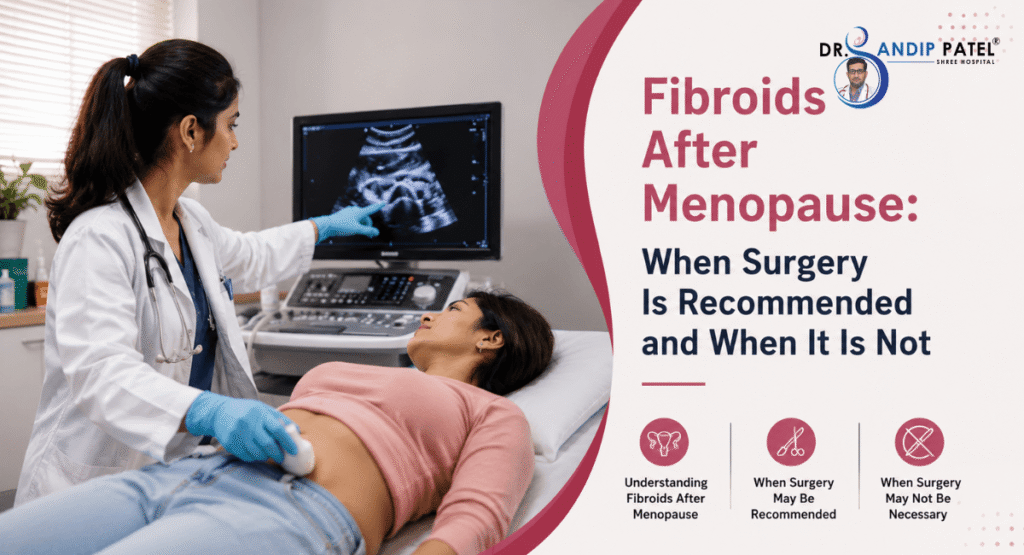
Many women believe that uterine fibroids disappear once menopause begins. While it is true that hormonal changes often cause fibroids to shrink, this is not always the case. Some women continue to experience symptoms, while others may even develop new concerns after menopause.
Understanding fibroids after menopause is essential because not every fibroid requires surgery, but ignoring persistent symptoms can sometimes lead to serious complications. Knowing when to monitor a fibroid and when to seek medical treatment helps women make informed healthcare decisions.
In this article, we explain how menopause affects fibroids, when surgery becomes necessary, and the treatment options available for women looking to maintain a healthy and comfortable life.
Uterine fibroids after menopause are non-cancerous growths that develop in or around the uterus. They are made of muscle and fibrous tissue and can vary greatly in size. Some women have only one fibroid, while others develop multiple fibroids.
Fibroids are mainly influenced by estrogen and progesterone, which is why they are most common during the reproductive years. As hormone levels decline after menopause, most fibroids gradually become smaller.
However, this natural shrinking process does not happen for every woman.
One of the most common questions women ask is, do fibroids shrink after menopause?
In many cases, yes.
After menopause, estrogen production decreases significantly, removing the hormones that typically stimulate fibroid growth. As a result:
However, some women continue to experience:
Women receiving hormone replacement therapy (HRT) may also notice that fibroids do not shrink as expected because supplemental hormones can continue to stimulate their growth.
Although menopause often reduces fibroid-related symptoms, some women continue to experience complications.
Common fibroid symptoms after menopause include:
One important symptom that should never be ignored is vaginal bleeding after menopause. Since postmenopausal bleeding is considered abnormal, it requires immediate evaluation to identify the underlying cause.
Not every woman requires surgery. Many fibroids can simply be monitored with regular follow-up appointments.
However, fibroid surgery after menopause may be recommended in certain situations.
When fibroids continue causing pelvic pain despite medication, surgery may provide long-term relief and improve quality of life.
Fibroids generally shrink after menopause. If a fibroid continues growing, doctors may recommend surgery to rule out rare but serious conditions.
Large fibroids may press against the bladder or bowel, leading to:
If these symptoms interfere with daily life, surgery becomes a suitable option.
Although extremely uncommon, cancerous tumors of the uterus can sometimes resemble fibroids. If imaging raises concerns or the fibroid grows unexpectedly after menopause, surgery may be advised for accurate diagnosis and treatment.
Bleeding after menopause should never be considered normal. If fibroids are identified as the cause, surgical treatment may be necessary after a thorough evaluation.
Many women diagnosed with menopause and fibroids do not require an operation.
Doctors often recommend observation when:
In these cases, regular pelvic examinations and ultrasound scans help monitor changes over time.
Several fibroid treatment after menopause options are available depending on symptoms, fibroid size, and overall health.
If fibroids are shrinking naturally and causing no discomfort, routine monitoring may be all that is needed.
Pain-relieving medications may help manage mild discomfort, although they do not remove fibroids.
Certain women may benefit from procedures that reduce blood supply to fibroids, causing them to shrink while preserving surrounding tissue.
If symptoms are severe or complications develop, surgery offers a permanent solution.
Common surgical procedures include:
The most suitable procedure depends on the patient’s age, medical condition, symptoms, and treatment goals.
Proper diagnosis ensures that treatment is based on accurate findings rather than assumptions.
A gynecologist may recommend:
These tests help determine whether symptoms are truly caused by fibroids or another gynecological condition.
While lifestyle changes cannot eliminate fibroids, maintaining good overall health may support symptom management.
Helpful habits include:
Early evaluation often leads to simpler and more effective treatment.
With Shree Hospital Anklav, women receive compassionate and comprehensive gynecological care tailored to every stage of life. Whether you need evaluation for uterine fibroids after menopause, advanced imaging, expert consultation, or surgical management, our experienced specialists focus on delivering safe, evidence-based treatment with a patient-first approach.
From routine gynecological care to high-risk pregnancy management and fertility services, including guidance on IVF treatment cost in Anklav, Shree Hospital is committed to providing quality healthcare under one roof. If you are experiencing symptoms related to fibroids after menopause, schedule a consultation with our specialists to receive the right diagnosis and the most appropriate treatment plan for your individual needs.
The best laparoscopic surgeon in Anklav is one with proven experience, advanced surgical skills, and a patient-first approach. At Shree Hospital, Dr. Sandip Patel is known for his expertise in minimally invasive gynec surgery and consistent outcomes.
Laparoscopic surgery is commonly used to treat ovarian cysts, fibroids, endometriosis, ectopic pregnancy, and infertility-related conditions. It is also used for diagnosis in certain unclear cases.
Yes, laparoscopic surgery is considered very safe when performed by an experienced laparoscopy specialist. It involves smaller cuts, less pain, and a lower risk of complications compared to open surgery.
Recovery is usually faster than traditional surgery. Most patients can return to normal activities within a few days to a week, depending on the procedure and individual health.
Look for a qualified surgeon with experience in advanced laparoscopic procedures, positive patient outcomes, and access to a well-equipped hospital. Personal consultation also helps you feel confident and informed before treatment.
Let’s discuss your fertility goals and create a personalized treatment plan for you.